The 2002 season was difficult to deal with from a roto perspective. All the summer strike talk made transaction decisions tougher than usual. Should you think long term or short term when trading and claiming? It was
also a very good year for pitching in MLB. This trend caught most by surprise and made it very difficult to come up with quality hitters via the draft or claim. Many NJRBL teams had loaded up on saved pitchers expecting
there to be the usual abundance of hitting available. The platoon concept also seemed to increase in popularity with MLB managers. These changes increased the value of quality proven hitting.
Matt Favaro rejoined the Bombers after a seven year absence and immediately embarked on a two year rebuilding effort. While it is still too early to determine if the plan will be a success, having another owner actively transacting
did change the league dynamics. Matt wasted little time setting the league on its ear with two March deals. Post saver, pre draft March deals have not historically happened in the NJRBL, especially trading away multiple players for one.
In these deals the Bombers traded away six veteran players, but landed Derek Jeter and Alfonso Soriano. Although criticized widely at the time, both deals now seem to favor the Bombers.
Three all time pitching records were tied or broken during 2002. The Monarchs established new marks in Saves (154) and K/IP (.925). More significantly, the Monarchs 1.199 in WHIP marked the first time since 1998 that a team got listed
in the records in either of the two leading pitching indicators, WHIP and ERA. RH Factor tied the W/L record with a +43. Overall there were five hitting totals and ten pitching totals that qualified for
listing in the records. The Monarchs also made a run at the all time point total of 116.0, but fell short with a lousy final pitching week.
The big story of the 2002 season was the return of the Monarchs. After an unthinkable 11th place finish in 2001, the franchise bounced all the way back to claim a second league title.
THE DISASTER
The Monarchs spent every single day of the 2001 season in 11th place. Very disappointing considering the team planned to contend after a surprising 3rd place finish in 2000.
Planning for the 2002 season began in June. Three good things happened to the Monarchs in 2001. Matt Morris and Albert Pujols were drafted, and the team was so bad that it
was possible to pull the plug very early in the season. This allowed the Monarchs to make quite a few inseason delay pay deals. The most notable players shipped away were Robby Alomar,
Kevin Brown, Matt Morris, Brian Jordan, and temporary rights to Greg Maddux and Gary Sheffield. In return the Monarchs set the foundation for much of the 2002 success.
Curt Schilling, Bobby Abreu, Lance Berkman, Darryl Kile, and a ton of quality draft picks were the key additions.
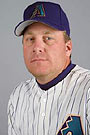 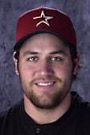 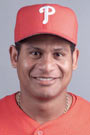 delay pay acquisitions
In hindsight the 2001 Monarchs save list was not very good. Too many unproven and questionable arms that did not work out combined with a handful of hitters that were not worth saving.
This mix provided a recipe for disaster.
FROM THE ASHES
The 2002 pitching staff came together first. Curt Schilling had the makings of a dominant starter, Darryl Kile was a solid innings eater, and Barry Zito was a young talent with stud potential.
This created a nice stable foundation to build on, but the staff still lacked an overall plan.
Keith Foulke joined the team in a deal with the Beagles. When Kaz Sasaki was added in a trade with the Bombers just prior to the draft, it was decided to go with a closer oriented staff. This strategy
had failed when tried by other teams in the past. Ideally ERA, WHIP, Saves, and K/IP could be maximized, while taking the hit in Innings Pitched and probably Wins/Losses. With all the first round draft
picks it made sense that relievers would be available and provide suitable value in these spots. The real danger would be that the fate of the staff rested in the hands of so few starters.
  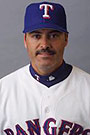  offseason deals
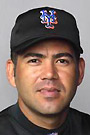
The hitting components were pieced together from all directions. The team had two quality catchers in Mike Piazza and Jason Kendall. The middle was better than average with Edgardo Alfonzo and the newly
acquired Rich Aurilia. While this positional advantage was very nice it was still not capable of providing the raw numbers necessary to compete.
Key offseason additions Raffy Palmeiro, Ryan Klesko, and Bobby Abreu could provide steady, predictable, veteran support, but were unlikely to put up the monster numbers that would be needed to match up with
the big boys like Bonds, Sosa, AROD, and Manny. Pat Burrell was the 12th saver and was not being counted on to provide much more than passable 4th outfielder production.
     saved hitting
Two young, unproven hitters coming off big 2001 seasons were the keys to the hitting plans. Lance Berkman came over from the La-z-Boyz where he had put together All-Star caliber numbers in his first shot
at a full time job. Albert Pujols was a Monarchs' free saver that came out of nowhere to capture the NL Rookie of the Year award. Would these players be one year wonders or would they establish themselves as
take it to the bank offensive studs in their second full seasons?
THE DRAFT
The 2002 Monarchs had fifteen players on the roster heading into the draft. The pitching looked very strong with three quality starters and two closers. The ten hitters had potential, but for the most part lacked
a proven track record. With 8 picks in the first 35 selections the team figured to add more help.
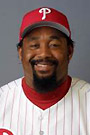
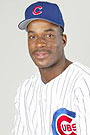
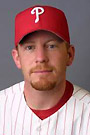
The draft was in one word, LOUSY! Of the six players taken in the first round, only Fred McGriff and Jose Mesa provided any help. Sean Casey was dealt. Carl Everett, Jeff Zimmerman, and Scott Strickland were total busts.
The second round proved to be a little better with the addition of Randy Wolf. Todd Walker was also dealt, while Estaban Yan was another bad closer pick. Third rounders Rick Ankiel and Kris Benson capped off an awful draft day.
   draft picks
Missing badly on 3 of the 4 closer choices could have proven particularly damaging. All those picks, yet only 3 drafted players would contribute. If the 2002 draft was any indication, the Monarchs would have really struggled again.
THE EARLY SEASON
The Monarchs got off to a fast start. The team was on top in five of the first eight weeks. The pitching was performing as expected, while the hitting showed signs that it was for real. Berkman and Pujols picked up right where they left off.
The biggest concern early on was that the bullpen was going to be a problem. Zimmerman was hurt, Strickland got traded, and Foulke struggled.
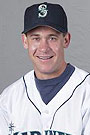
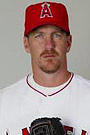
The first big move of the season took place on April 29th. The Monarchs added Matt Clement, Troy Percival, and Bret Boone from the La-z-Boyz for Sean Casey, Todd Walker, and Barry Zito. The bullpen had to be shored up, it was expected that Boone
would upgrade the hitting, and it was hoped that Clement would be a functional starter. Giving up Zito was a risky proposition, especially considering the few starters on the team.
   1st big inseason move
Claimed players did not really make significant contributions to the cause. Shea Hillenbrand and Omar Vizquel helped out the offense. There were also some pitchers that showed some flashes. For the most part the team was built by trading.
THE DARKEST HOUR
On June 22nd Darryl Kile was found dead in his hotel room. This was obviously a terrible tragedy for his family and the Cardinals.
 Darryl Kile
1968-2002
Darryl Kile
1968-2002
From a roto perspective Kile was just starting to round into form after offseason arm problems. The Monarchs had a bullpen that was struggling, had traded Zito, and now had lost its number two starter. This was more significant
because the team was employing the closer strategy.
The defining moment of the season came when it was decided to stay the course with the closer strategy. It certainly helped that the team was in first place and the hitting was starting to really kick in. But the pitching staff had developed
a serious crack and was at risk of dashing any title hopes. The team ERA dropped all the way to seventh place around this time.
THE SECOND HALF
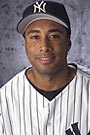
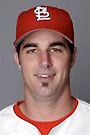
The Monarchs made a second big move on June 30th in an attempt to hold off a pitching collapse. Hot starting Tom Glavine and Bernie Williams were added from the La-z-Boyz in a delay pay deal for Mike Piazza. While Glavine struggled for much
of the remaining season, he did help the Monarchs stay patient in their pitching approach. Williams proved to be an invaluable contributor.
  key late additions
The five time defending champion Scrubs put a scare into the Monarchs when they acquired Bagwell, Tejada, and Colon in a late June delay pay with the Swillers. Surprisingly a solid run at first place never really materialized. The Scrubs were unable
to get the machine running on all cylinders. The deal did certainly solidify their hold on second place.
Week 7 marked the last time the Monarchs were not in first place. Pitching insurance was added in August when Mariano Rivera came over from the Bombers and Matt Morris was reacquired from the PC 1st Cousins.
By the middle of August the first Monarchs' title in eleven years became a foregone conclusion. The final six weeks of the season became an effort to surpass the all time single season points record of 116. The team fell short of this mark, finishing
with 112 points, when the team lost 5 points in the final week of the season.
NEW CHAMPION
The awful 2001 season became the catalyst for the Monarchs return to championship status. The 2001 roster was gutted through a series of delay deals. A couple of additional offseason deals and the Monarchs once again had the potential to contend.
A risky pitching philosophy was developed to take advantage of personnel and lofty draft position. The hitting benefited when MLB unexpectantly became more pitching oriented. Young hitters proved they were more stud than flash. The team also stayed
relatively injury free, although the loss of Kile was significant.
Delay trades in the 2001 season, offseason trades, trades inseason to patch holes, and then more trades to ice the title. The roster was turned over almost completely in a very short period of time.
The 2002 Monarchs; proof positive that taking risks, planning, luck, and effort can result in a 75 point improvement, a climb from last to first, and the franchises second NJRBL Championship!
Behind Door #1 was a TITLE!
Monarchs (once again) Rule!


|
